
By Adam Pagnucco.
State Question 3, which would amend the state’s constitution to overturn a judicial decision on Maryland congressional district boundaries, is the top priority of Maryland’s Democratic Party. Party heavyweights, including Governor Wes Moore and a big majority of General Assembly Democrats, depict the ballot question as needed pushback against President Donald Trump because it would allow the state to redraw its congressional districts to counter gerrymandering in Republican-controlled states.
But while the fight against Trump is real, this issue is drenched in decades of history. Voters must understand that history to assess whether Question 3 deserves their support.
Maryland’s state government has been dominated by Democrats for most of its modern history. The State Senate and the House of Delegates have each been continually led by Democrats for more than a hundred years. Since 1970, Democrats have served as governor for 44 years while Republicans have served a combined 12 years. And so while the Democrats have often ruled alone, GOP governors have faced the substantial constraint of a legislature controlled by the opposing party.
Democratic dominance has not always held in Maryland’s congressional delegation as the Free State has elected many Republicans to Congress over the years. For example, from 1993 through 2002, four of Maryland’s eight U.S. House members were Republicans. And one of those congressional Republicans – District 2’s Bob Ehrlich – broke decades of Democratic dominance by getting elected governor in 2002. Ehrlich’s appointment secretary, Larry Hogan, went on to serve two terms as governor years later. And so Maryland Democrats learned an important lesson: Republicans could use congressional seats as launch pads to threaten their control of Annapolis.
Over time, the GOP waned in most of the state’s population centers but they clung to power in red strongholds in Western Maryland and the Eastern Shore, each of which formed the core of a congressional district. Going into the 2011 round of redistricting, Democratic leaders had a choice: which part of the state would they target for a flip from red to blue? They wound up picking Western Maryland’s District 6. And their plan succeeded, as incumbent GOP Congressman Roscoe Bartlett fell to Democratic businessman John Delaney in 2012, beginning an era of Democratic control extending to today. But the plan needed two components to work.
The first component was massive gerrymandering to inject Democrats into District 6. The prior District 6 hugged the Pennsylvania border and included a tiny sliver of northern MoCo. The new District 6 replaced some of the red rural areas by reaching deep into MoCo, even touching the I-495/I-270 spur.
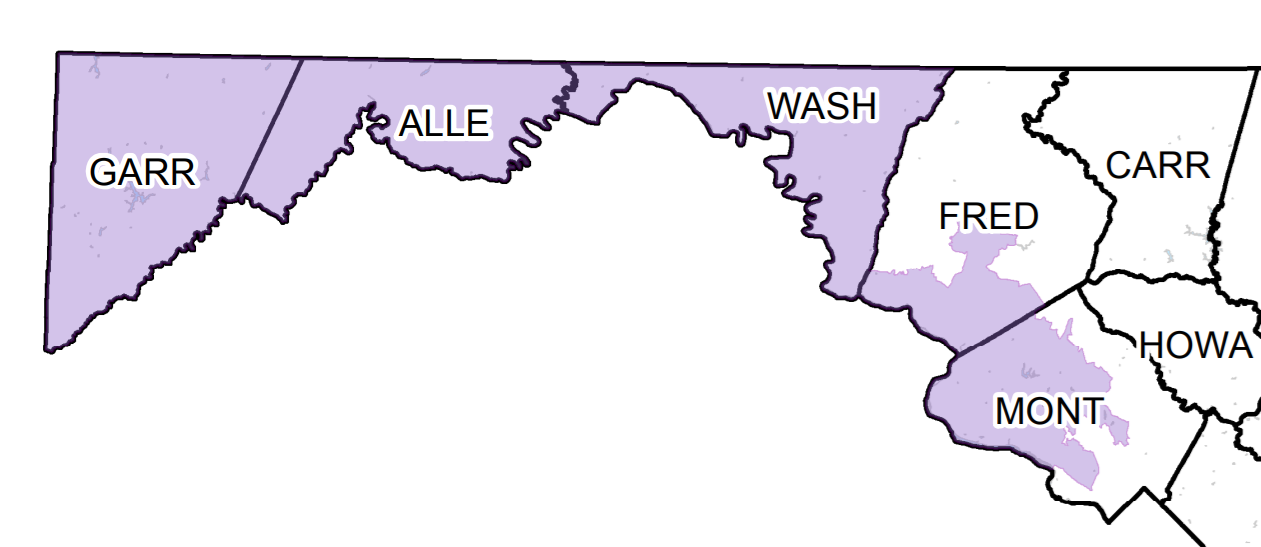
The 2011 version of Congressional District 6.
But the rule of redistricting is that changes to one district require changes to others. And extreme changes require other extreme changes. So to create a blue-leaning District 6, Annapolis Democrats spawned a misshapen horde of congressional districts to absorb refugee Republicans while still protecting Democratic control. Check out the resulting districts that incorporated such calculations.
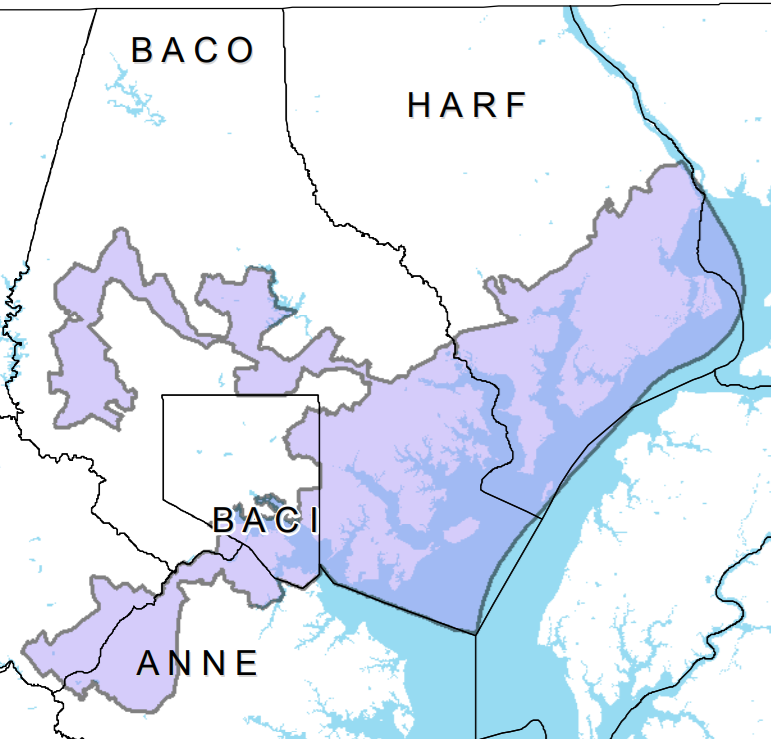
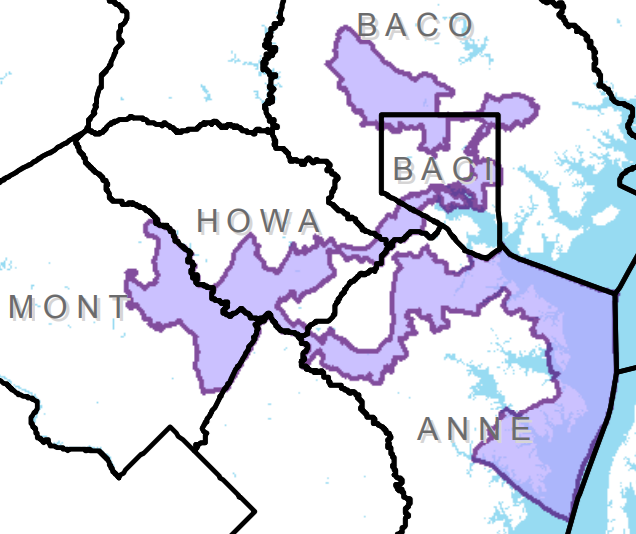
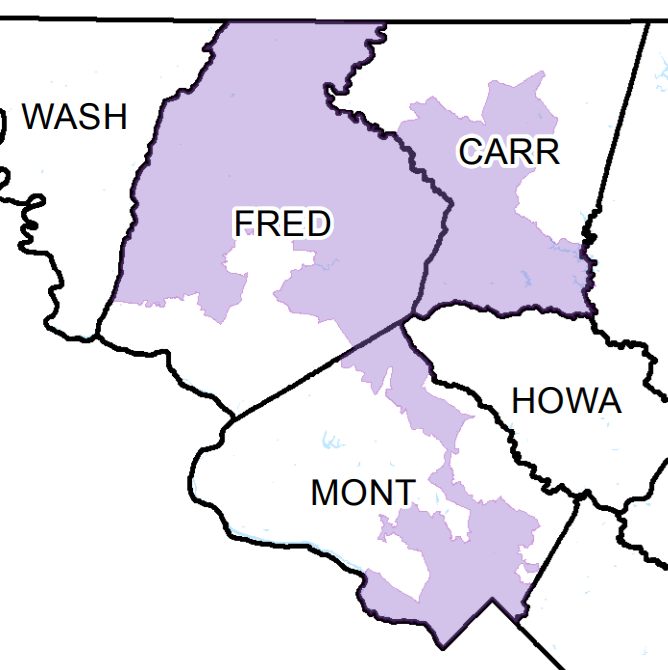
The 2011 versions of Congressional Districts 2 (top), 3 (middle) and 8 (bottom).
The second component of the 2011 plan was to pack as many Republicans as possible into the Eastern Shore’s District 1 to protect Democratic incumbents elsewhere. The district was represented by arch-conservative Republican Andy Harris, but it was once represented by moderate Republican Wayne Gilchrest, and even (for one term) by Democrat Frank Kratovil. The cramming of GOP voters into the district protected nearby Democrats but it also served to protect Harris from any real chance of defeat.
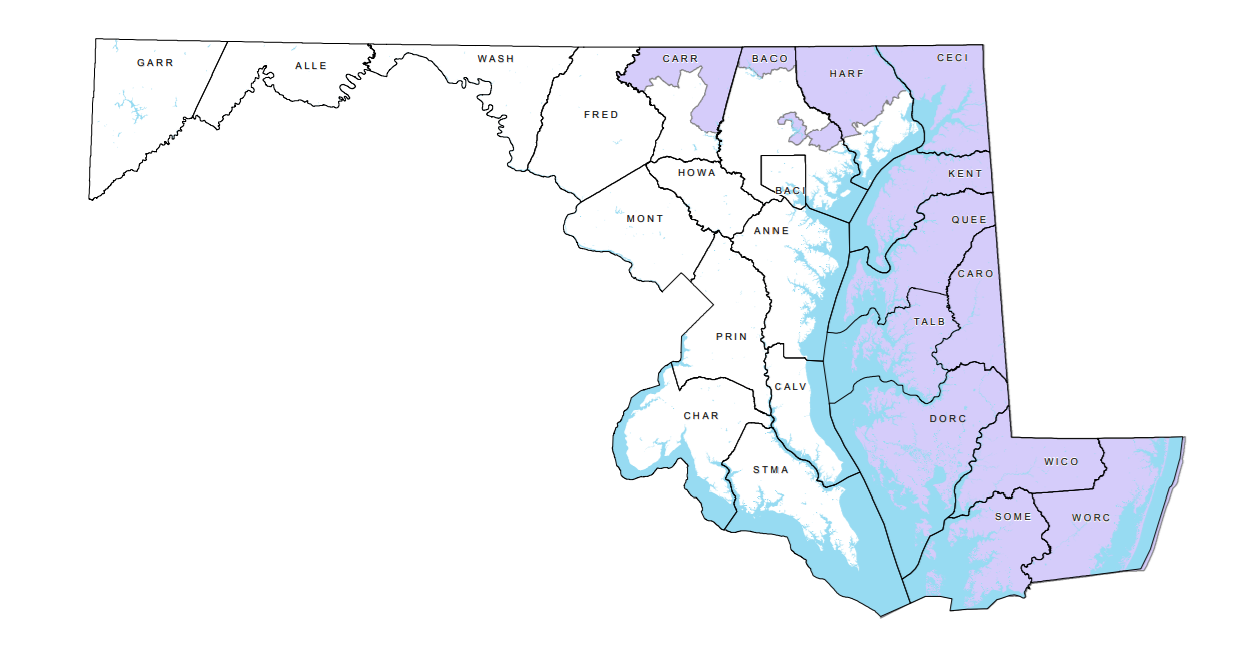
The 2011 version of Congressional District 1.
Maryland’s 2011 congressional districts were so extreme that election reform nonprofit FairVote later commented, “By some measures, Maryland is the nation’s most gerrymandered state.” The Brennan Center for Justice, another election reform group, found that Maryland’s District 6 was “well outside the norm” and “an outlier” even when compared to other gerrymandered districts. And a federal judge issued one of the most famous quotes in Maryland political history when he described District 3 as a “broken-winged pterodactyl, lying prostrate across the center of the state.”
Ten years later, with District 6 under control, it was Harris’s turn to go. Annapolis Democrats advanced a District 1 map that replaced many of Harris’s Republican constituents in Baltimore, Carroll and Harford counties with Democrats in Anne Arundel County by stretching a tentacle across the Bay Bridge. Surrounding congressional districts were mutated to once again absorb ejected Republicans while protecting Democratic incumbents. The 2021 recommended map is shown below.
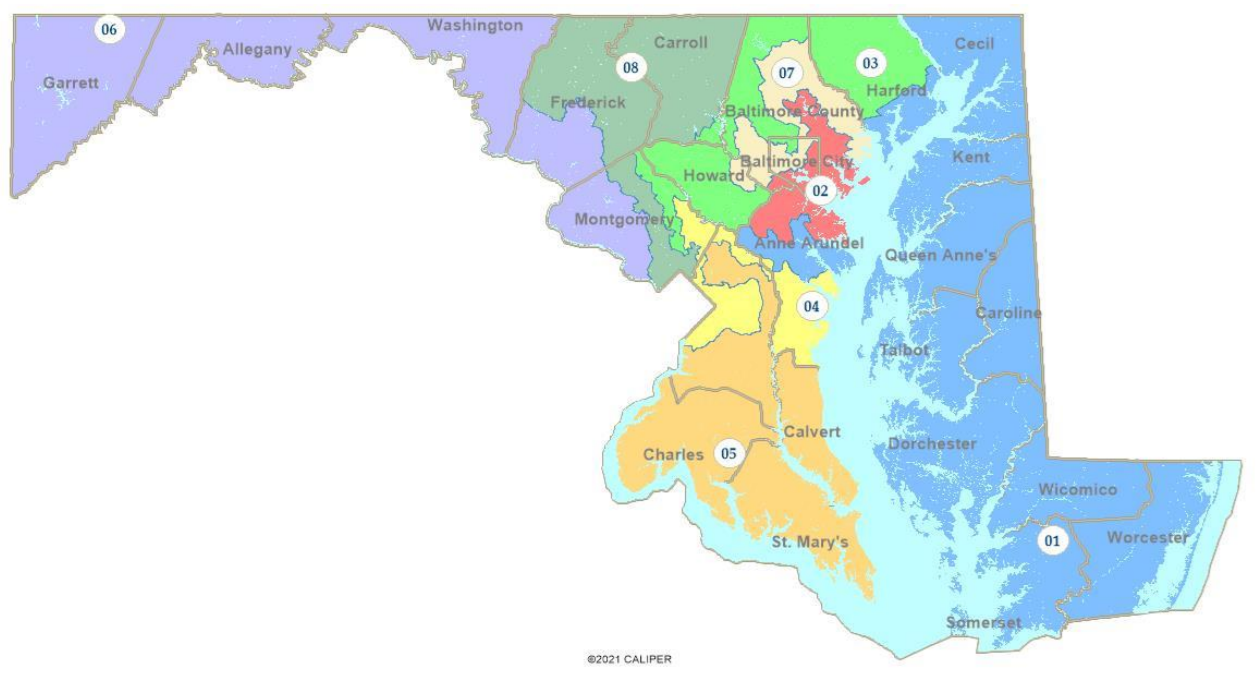
But a state judge threw the 2021 map out, ruling that language in the state’s constitution requiring state legislative districts to be compact and to give “due regard” to “natural boundaries and the boundaries of political subdivisions” also applied to congressional districts. The Democrats backed down and approved the map below that minimized gerrymandering.
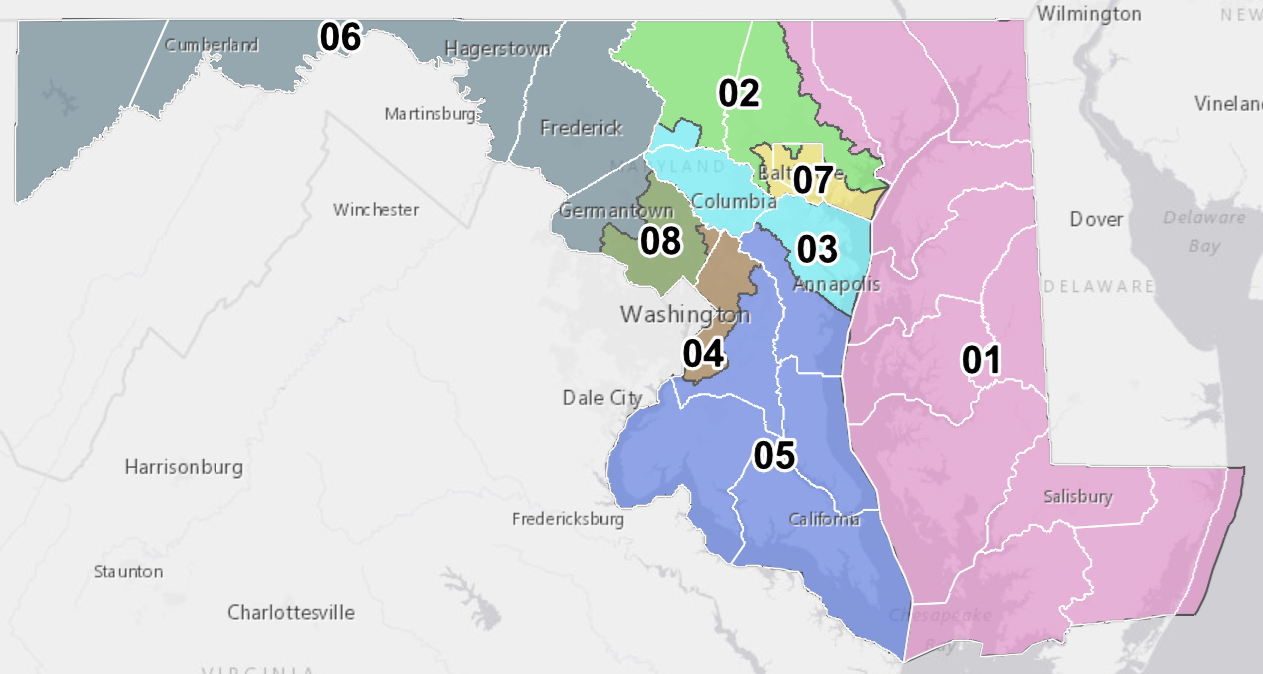
Today’s congressional district map, a strong contrast with the heavily gerrymandered 2011 and 2021 maps.
Note how none of the above history involves Donald Trump in any way.
It’s true that Republican mid-decade gerrymandering in other states, egged on by Trump, has pushed Maryland Democrats to revive this issue. State Question 3 is a constitutional amendment designed to free the General Assembly from having to consider compactness, natural boundaries and subdivision boundaries when designing congressional districts. That’s the same freedom now used so gleefully by their gerrymandering GOP counterparts in other parts of the country. But given Trump’s extraordinary unpopularity and its resulting impact on U.S House polls, it’s unclear whether a potential GOP loss of one seat in Maryland will swing the national pendulum of power. And in any event, new districts cannot be drawn in Maryland this year. If the ballot question passes, any new districts will have to wait until 2028 at the earliest to take effect.
Three things are now clear.
1. Maryland Democrats have a history of extreme gerrymandering that was only stopped by a 2022 court decision.
2. Constitutional amendments are serious business. They are far more powerful than any state or local laws beneath them.
3. Any constitutional amendment enshrining gerrymandering will long outlive Trump’s presidency.
Consider these things as you decide whether to allow broken-winged pterodactyls to once again lie prostrate over the political ground of Maryland.