By Adam Pagnucco.
In Part One, I laid out a first cut framework for determining which elementary schools might be targeted for closure. That framework included projected capacity utilization in the 2032-33 school year, projected capacity utilization in nearby schools and facility condition as measured by MCPS’s facility condition index. Using these factors, any consultant should be capable of identifying groups of schools that could be candidates for closures and consolidations. Part Two identified one group in Rockville. Now let’s look at a group in Chevy Chase and Kensington.
Somerset ES and North Chevy Chase ES, both in Chevy Chase, are projected to be two of the most underutilized elementary schools in MCPS. By the 2032-33 school year, Somerset is projected to be 51% full and North Chevy Chase is projected to be 53% full. Kensington-Parkwood ES, to the north of North Chevy Chase, is projected to be 64% full. Somerset and North Chevy Chase are middle of the pack in facility condition while Kensington-Parkwood is well above average.
While capacity utilizations are low, any closures, consolidations or boundary redrawing in this group will be complicated by North Chevy Chase’s relationship with Rosemary Hills ES in Silver Spring. The latter school enrolls pre-K through second grade and then sends its students to both North Chevy Chase and Chevy Chase ES. Capacity utilization is projected to be 78% in Rosemary Hills and 87% in Chevy Chase, so while each of them will have space, neither is among the more underutilized schools in the district.
Rosemary Hills has a facility condition index score of 0.684896, ranking 129th of 135 elementary schools. It needs more than $4 million of capital investment within the next five years, including work on its roof, interiors, HVAC, electrical system, fire alarm and electronic systems. Will its condition factor into any decisions?
One more wrinkle: Bethesda ES, which is adjacent to Somerset, is projected to have a 106% utilization rate in 2032-33. That’s more than double Somerset’s rate of 51%. Instead of closing Somerset, would it make more sense to adjust Somerset’s boundaries to relieve crowding at Bethesda? That might head off a potentially expensive addition project in the future.
Untangling the North Chevy Chase-Rosemary Hills-Chevy Chase relationship would be a challenge for any consolidation effort. Also of note is that the area includes numerous influential municipal governments who would put up a big fight to protect their schools. Still, if MCPS does nothing, would competition from private schools cause underutilization to get worse?
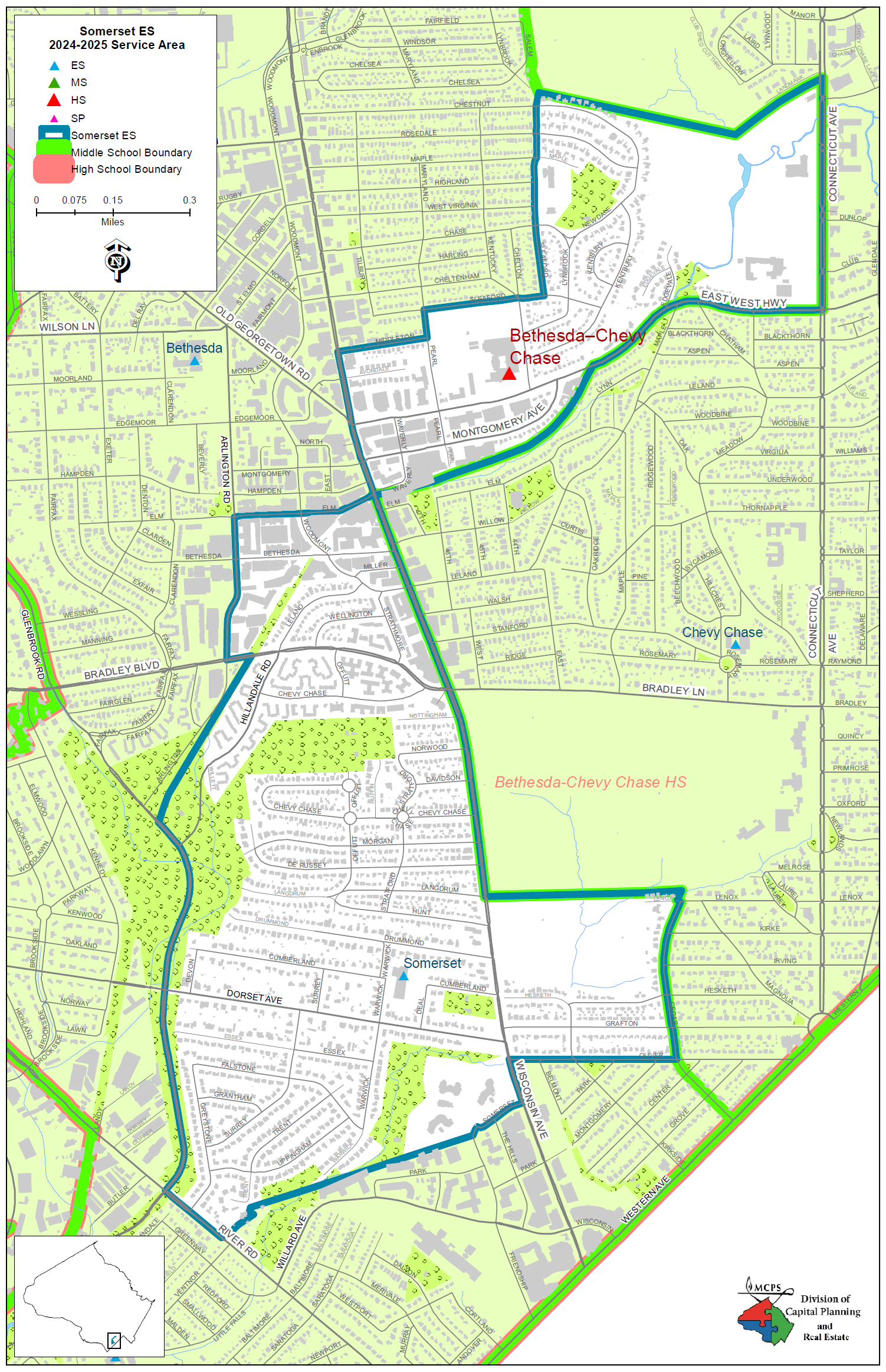
North Chevy Chase is bounded to the north by Kensington-Parkwood and to the southwest by Somerset. Descriptive stats and service area maps appear below.
Somerset ES, Chevy Chase
Enrollment, 2032-33: 290
Capacity, 2032-33: 564
Utilization: 2032-33: 51%
Last year renovated/modernized: 2005
Facility Condition Index: 0.530290 (74th of 135 elementary schools)
North Chevy Chase ES, Chevy Chase
Enrollment, 2032-33: 218
Capacity, 2032-33: 408
Utilization: 2032-33: 53%
Last year renovated/modernized: 1995
Facility Condition Index: 0.508593 (63rd of 135 elementary schools)
Complication: Rosemary Hills ES is a feeder school.
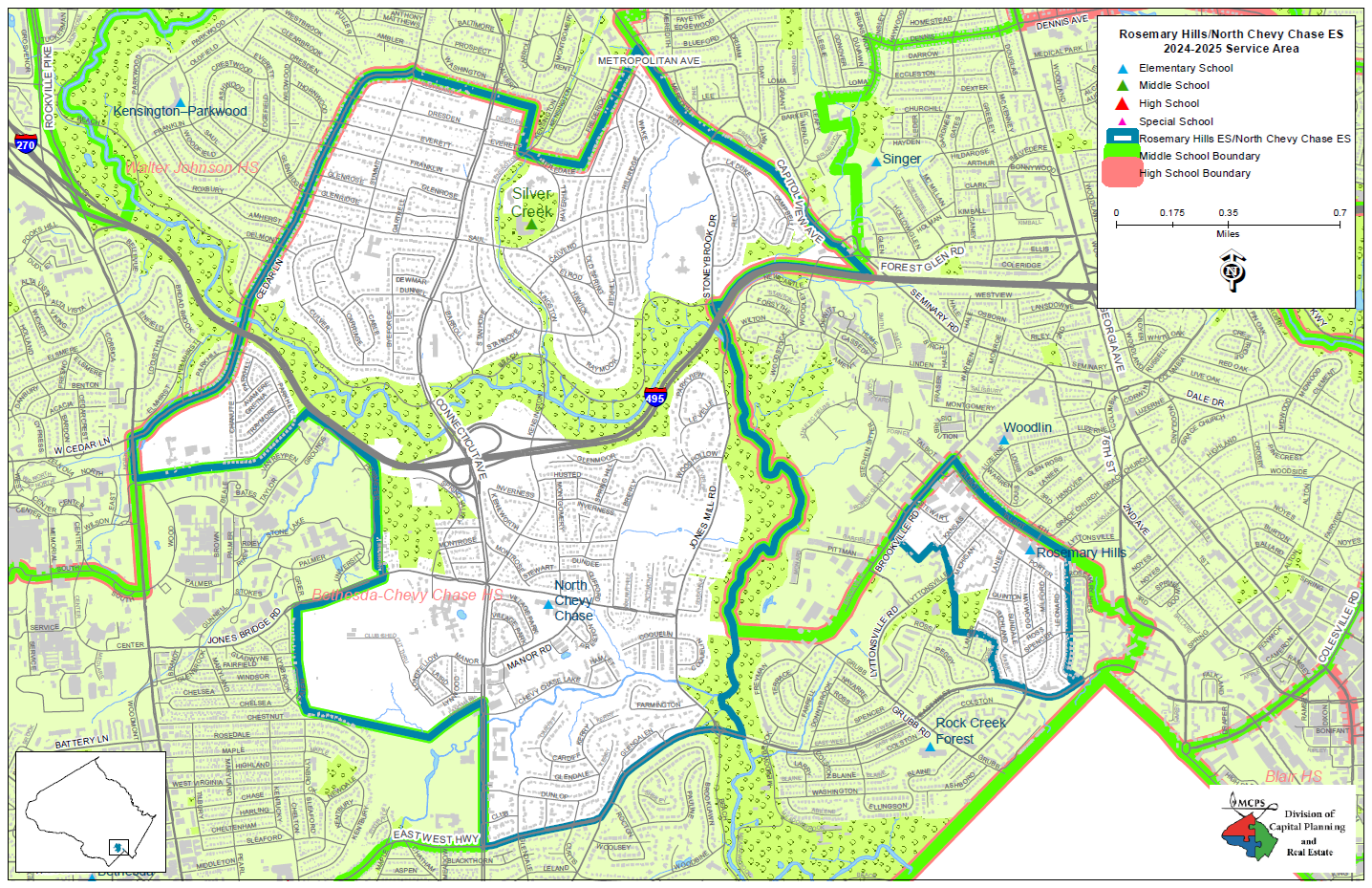
North Chevy Chase’s service area map.
Kensington-Parkwood ES, Kensington
Enrollment, 2032-33: 537
Capacity, 2032-33: 840
Utilization: 2032-33: 64%
Last year renovated/modernized: 2006
Facility Condition Index: 0.418678 (30th of 135 elementary schools)
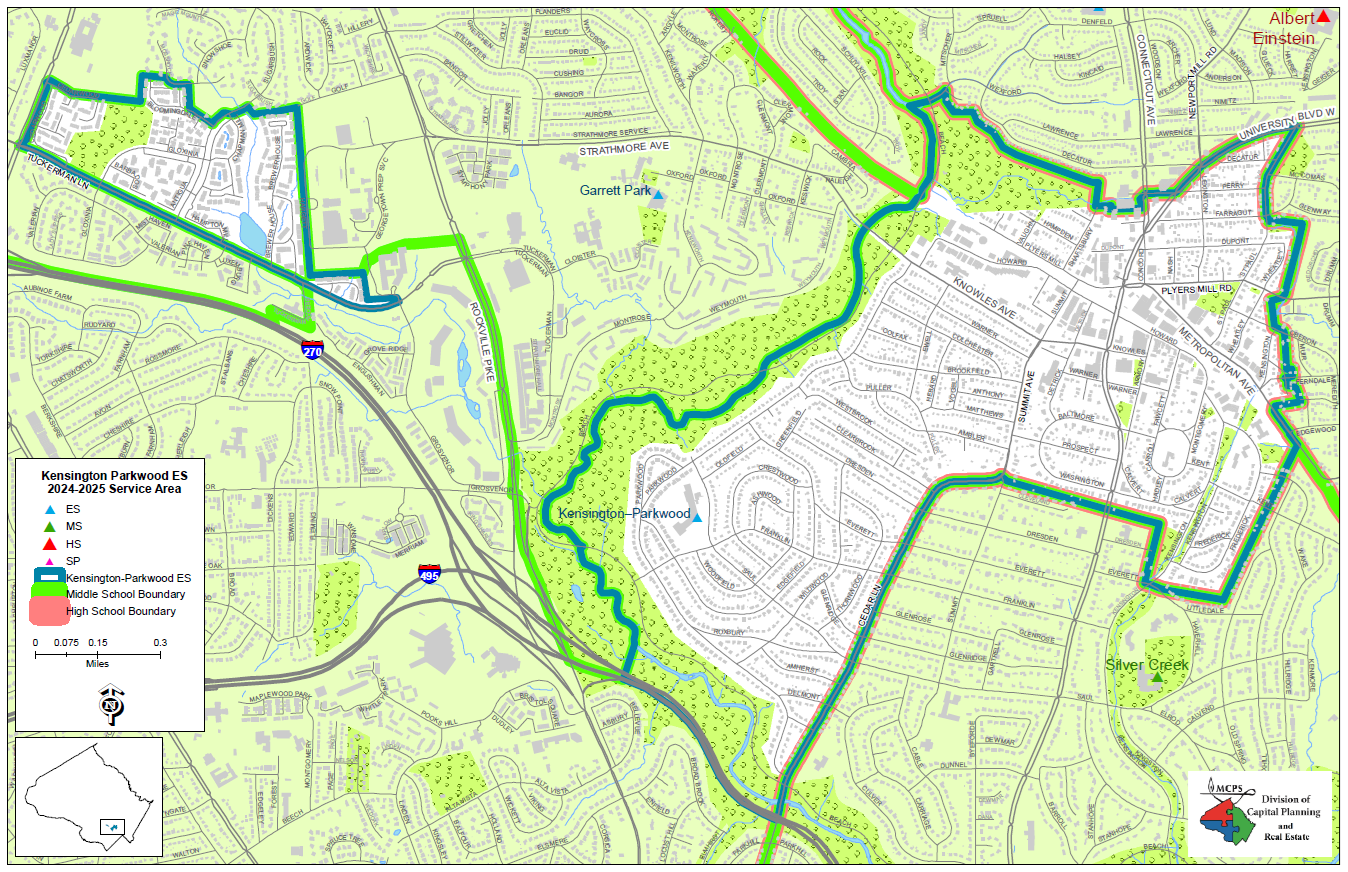
Kensington-Parkwood’s service area map.
Next: Germantown.
Note: As I wrote in Part One, I have zero affiliation with MCPS and no inside knowledge of any plans on closures, consolidations or boundary shifts. If I were to ask MCPS about their intentions, I am 100 percent sure they would direct me to their public presentation and say, “No decisions have been made at this time.” My work in no way represents MCPS.