
By Adam Pagnucco.
Part One explained the methodology of this series, which looks at U.S. Census data on residential addresses to approximate housing units. Part Two looked at residential address count growth in D.C., Maryland and Virginia. Part Three looked at address count growth at local jurisdictions inside Maryland and the Washington area. Now let’s look inside MoCo.
First, a note on methodology. As I related in Part One, this data is extremely user-unfriendly. Check out how it appears in downloaded form.
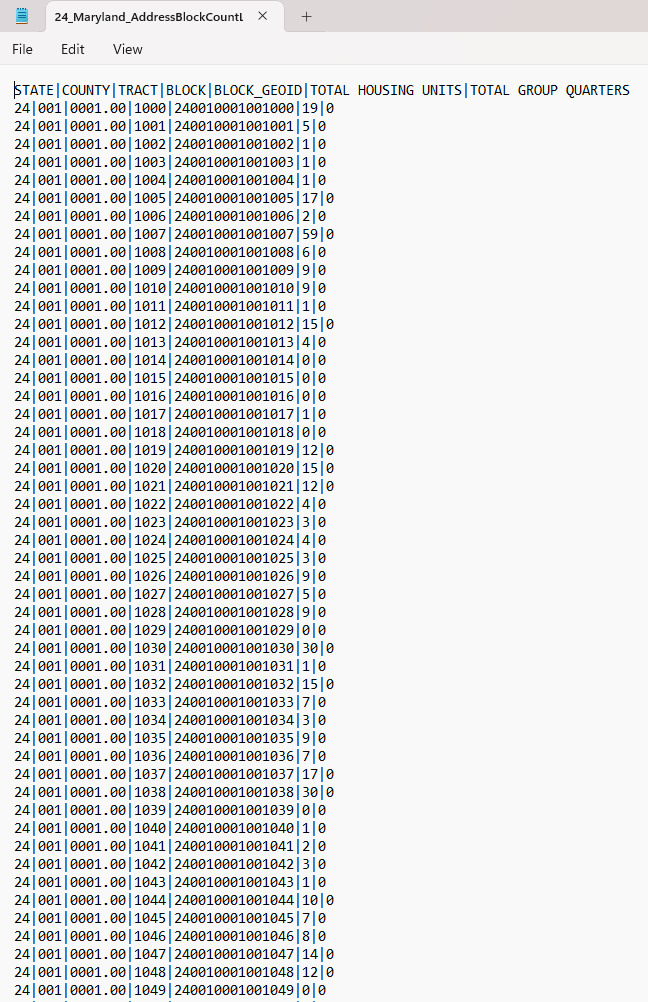
My goal was to organize this data in zip code form for locations in Montgomery County. Unfortunately, Census blocks don’t conform to zip code boundaries. In order to establish crosswalks of blocks to zip codes, I had to match maps and make hundreds of judgment calls across tens of thousands of records. And so what appears here are estimates. Another researcher might make different judgment calls, but I don’t think the overall patterns would be much different. In the absence of building permits by zip code (and there are problems with that too), this is about as local as we will get.
Let’s start with broad region growth from April 2020 through July 2025. You can find my definitions of Downcounty, Upcounty and rest of county here. Additionally, I show growth rates for zip codes with Metro stations and without them.
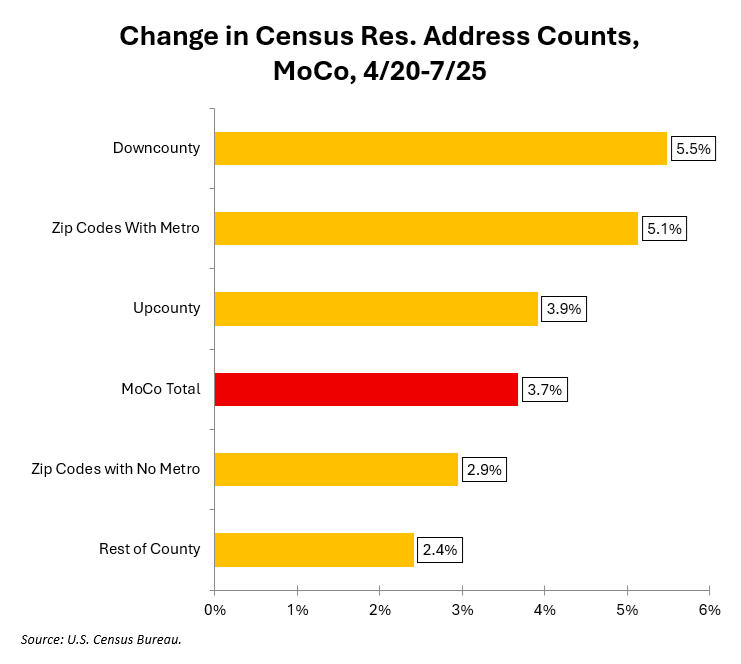
For many years, population growth in MoCo has been driven by Upcounty areas. However, over the past five years, this data series suggests that Downcounty has grown faster. Also, zip codes with Metro stations have seen more address growth than zip codes without them. MoCo land use policy has sought to direct development towards transit, so if this data is accurate, it depicts a significant success of county planning.
Now let’s go more local. The chart below shows residential address count growth from April 2020 through July 2025 for every MoCo zip code with at least 5,000 addresses.
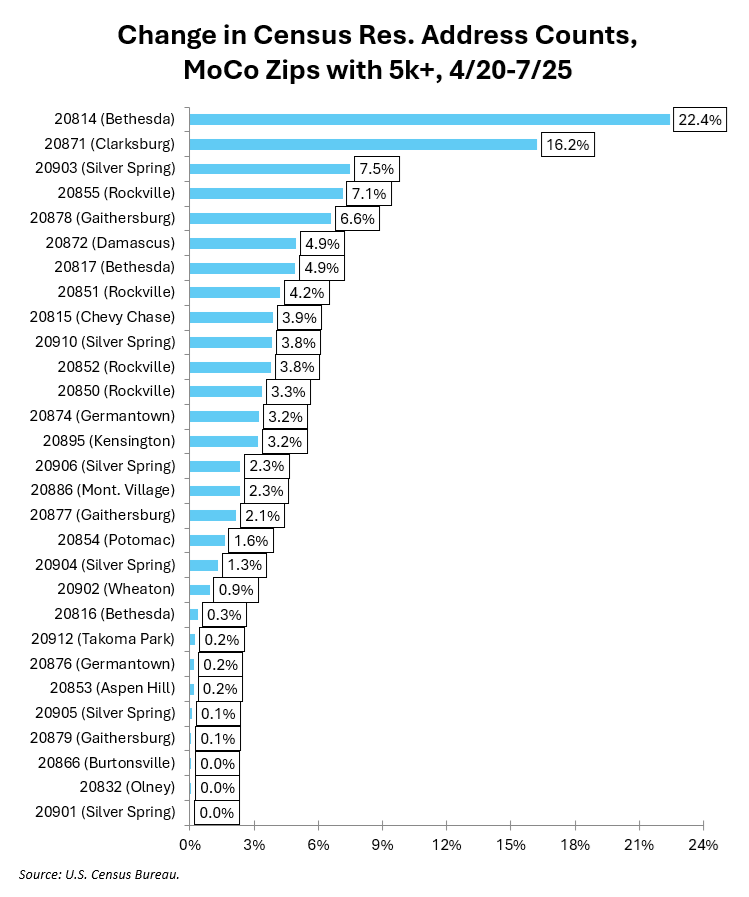
Here we see a more interesting story. Residential address growth has soared in a few areas, like Downtown Bethesda and Clarksburg, and stagnated in many other parts of the county. This has unavoidable political implications.
We will explore them next.